Planning and Designing Campus Environments that Support Mental Health and Belonging
Emmaly Pense, Senior Interior Designer | April 2026
The rising demand for student wellness spaces in higher education is reshaping how institutions plan and design their campuses. Today’s students arrive with greater awareness of mental health needs, and colleges and universities are responding with environments that actively support emotional well-being, inclusion, and resilience.
Designing Campus Mental Health Facilities with Empathy
Effective campus counseling and wellness center design begins with empathy and active listening. Engaging students, counselors, health professionals, and campus stakeholders helps uncover daily experiences, pain points, and goals. This insight directly informs design decisions, from spatial organization to material selection, ensuring each space supports users’ physical, emotional, and psychological needs.
Key Features of Student Wellness Spaces
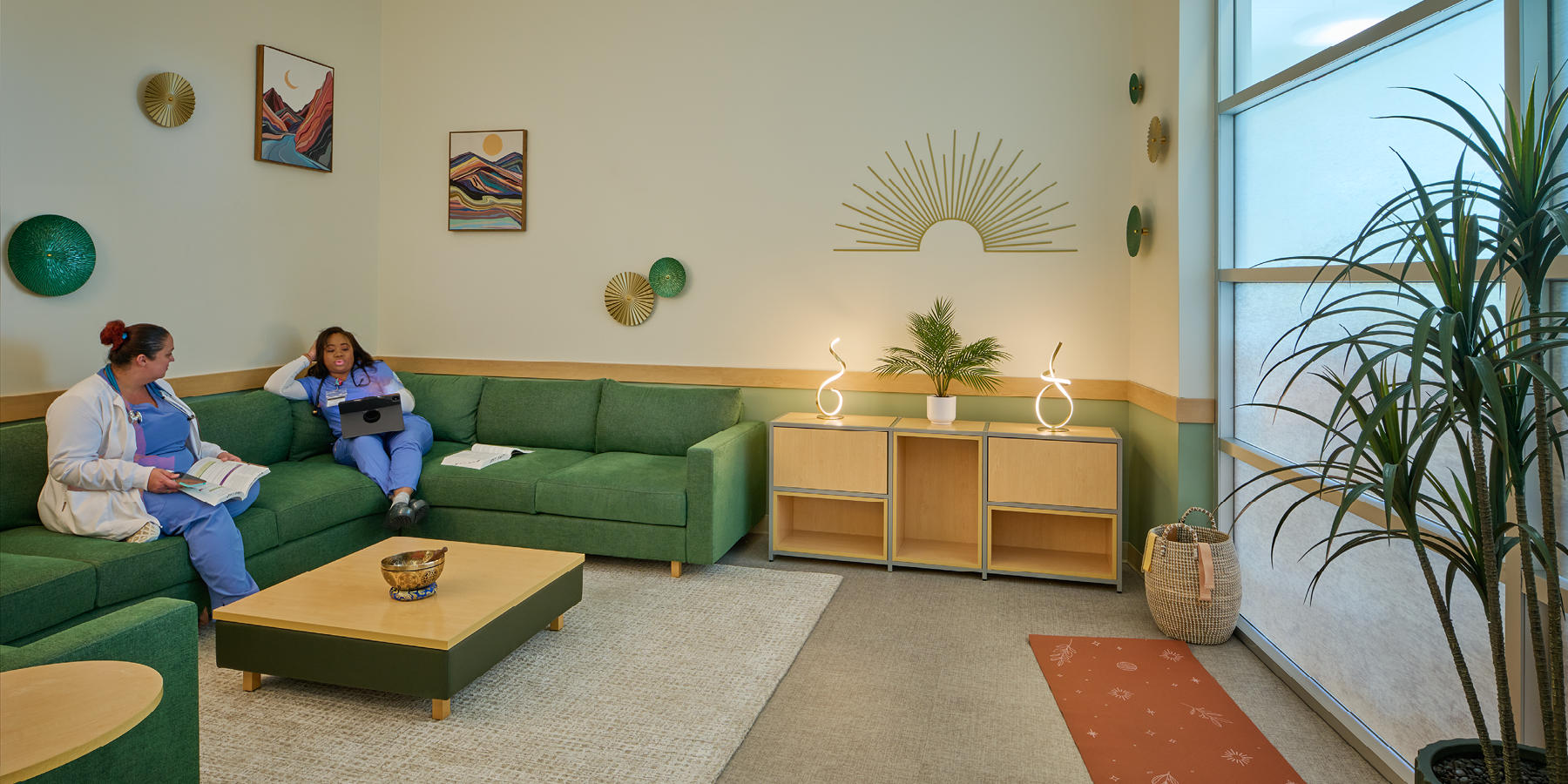
Modern university wellness facilities include a range of integrated environments such as counseling centers, meditation rooms, decompression areas, and quiet study zones. These spaces support mental health through both direct services and passive design strategies. Warm materials, intuitive layouts, and trauma-informed design approaches help create environments that balance privacy, safety, and connection.
Trauma-Informed Design
Behavioral health design for colleges and universities requires a high level of sensitivity. Thoughtful design can reduce stigma and promote dignity through calming aesthetics, biophilic elements, and non-institutional environments. Access to natural light, clear wayfinding, and carefully designed transitions help support students during vulnerable moments and improve overall comfort and usability.
A Campus-Wide Approach to Wellness
Student wellness extends beyond a single building. Successful campus wellness planning considers outdoor spaces, social zones, and informal gathering areas that promote restoration and belonging. These “third spaces” play a critical role in supporting student balance and fostering community.
Ultimately, we believe wellness on a college or university campus about more than programming—it’s about culture. And that culture begins with spaces designed with users, not just for them.
About Emmaly Pense

Emmaly Pense, EDAC, NCIDQ, Senior Interior Designer
603.622.5450 Extension 109 | emmaly.pense@LBPA.com
Emmaly is a creative and passionate interior designer who is dedicated to producing high-quality and innovative work. She works to develop solutions and strategies that will have the highest impact for all involved.